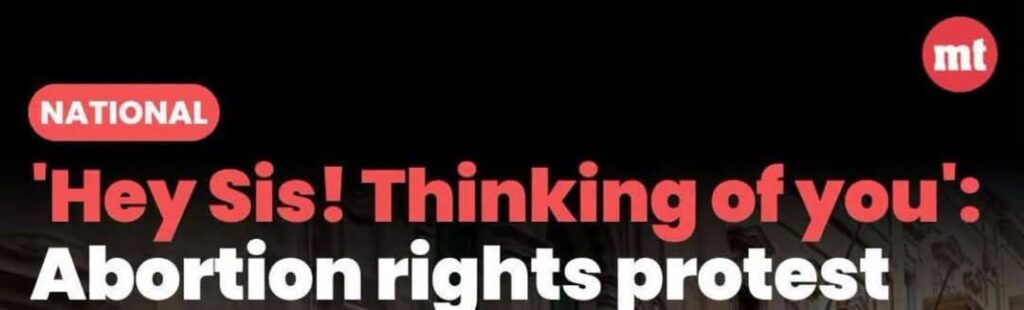
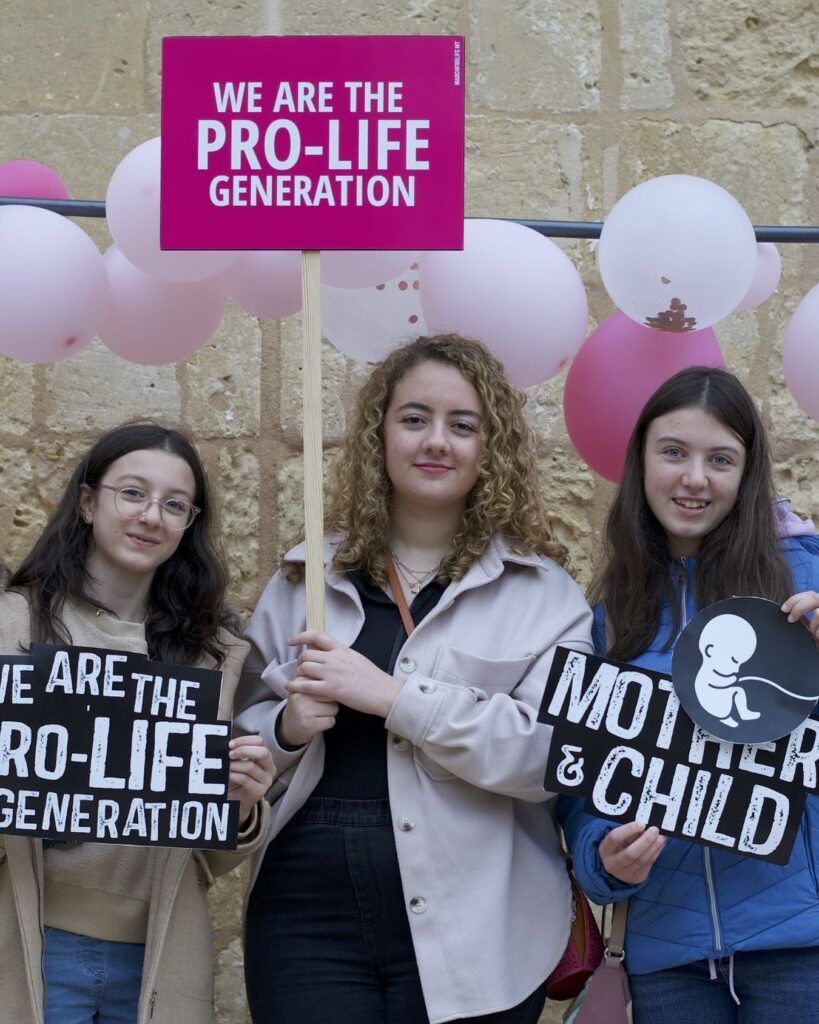
That was the message carried through Valletta a few days ago by the Voice for Choice rally: a call to be the “big sister” a woman might need, to stand beside women facing fear, secrecy and difficult pregnancies, and to offer practical and emotional support.
On one thing, at least, we can happily agree.
Hey sis. We are thinking of you too.
We are thinking of the woman staring at two lines on a pregnancy test and wondering how her entire life changed in thirty seconds.
The student thinking; what happens to my future now?
The mother wondering how she can possibly afford another child.
The woman who is frightened, abandoned or desperately wishing somebody would simply say: “I’m here.”
Yes. Be that sister.
But perhaps sisterhood can stretch just a little further. Because there is somebody else in this story. Very small. Very quiet. Very easy to leave off the placard.
The baby.
The September campaign spoke about a community that “refuses to leave anyone behind.”
We rather like that sentence. We would just add or emphasise one word: anyone.
At Life Network, supporting a woman does not mean pretending her child is irrelevant to her situation. It means refusing the tired idea that, somewhere along the way, compassion requires choosing which of the two deserves our support.
Give her help. Give her friendship. Give her practical assistance. Sit beside her when she is terrified. Help with the things that made her believe she had no choice in the first place.
And then stay. Long after the slogans and marches are over.
So yes: Hey Sis. Thinking of you.
Thinking of your fears. Thinking of your future. Thinking of your baby.
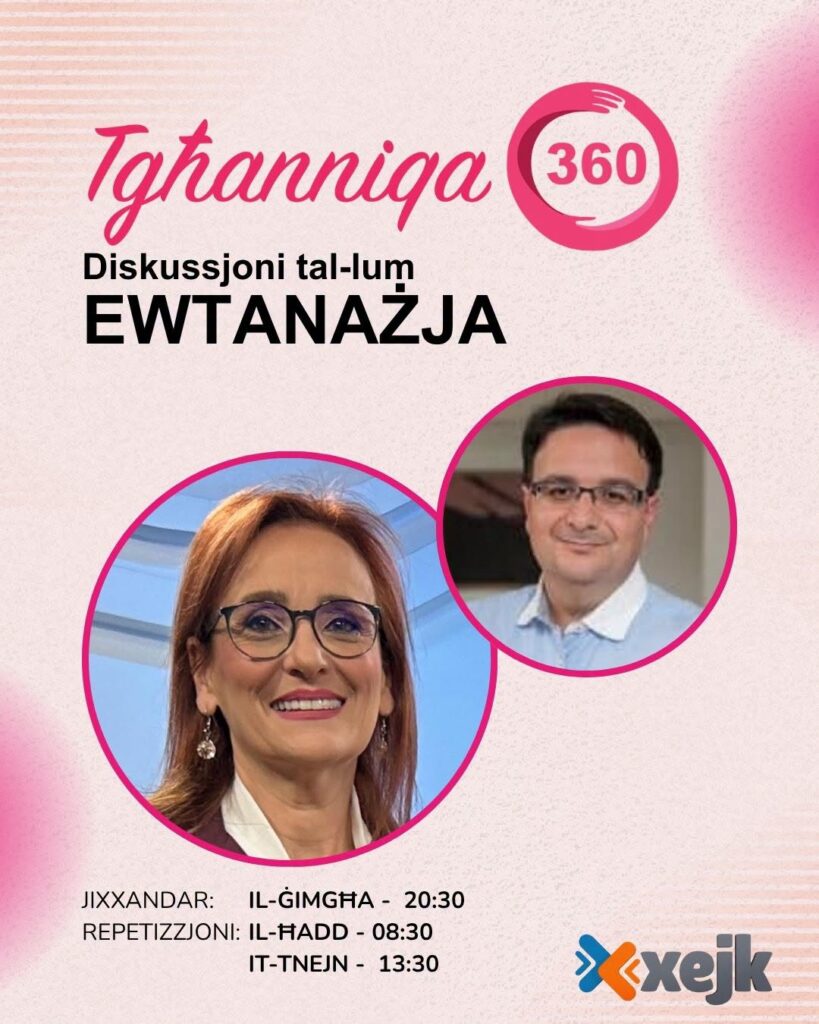
Life Network Foundation is launching a new series of 39 programmes, Tgħanniqa 360, on Xejk TV.
Throughout the series, we will explore the different areas of Life Network’s work and discuss issues connected to life, pregnancy, family, support, dignity and care.
Each programme will focus on a different topic, helping viewers understand the practical support available through Life Network and the challenges faced by individuals and families in our community.
We will also speak about the wider questions surrounding human life, from its earliest stages through different seasons and circumstances.
Tgħanniqa 360 will create space for conversation, information and real stories, while sharing the work being done every day to support women, children and families across Malta.
Join us throughout this 39-programme series on Xejk TV as we look at life from every angle.
**Put your business on TV while supporting a good cause!**
Life Network Foundation is preparing **39 episodes of our upcoming TV programme Tghanniqa 360**, and we’re inviting businesses to advertise with us.
Your advert can reach viewers across the series while your contribution helps support the work and mission of Life Network Foundation.
Interested in getting your business on screen?
Send us a private message or contact us to find out more.
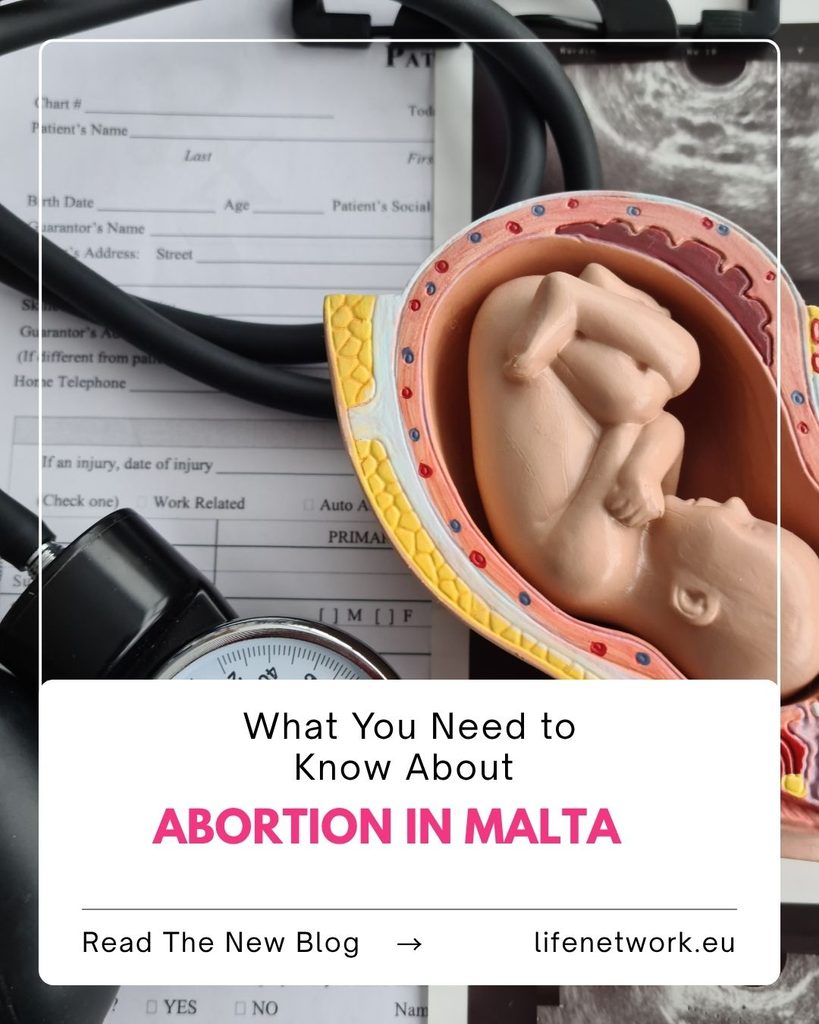
What are the things you Need to Know About Abortion in Malta? Abortion is discussed a great deal in Malta. There are pro-choice NGOs, activists and campaigns calling for changes to the law, and the subject appears regularly in our newspapers and social media feeds.
But amid all the noise, it is worth being very clear about what the law in Malta actually says.
Know about Abortion in Malta
The first thing you should know about Abortion in Malta is: Abortion remains Illegal.
Under Article 241 of the Criminal Code, deliberately procuring a miscarriage is a criminal offence. The law continues to recognise that human life has value from conception, and that jeopardising such life is a criminal offence.
There is, however, an important distinction that sometimes gets lost in the debate.
Malta’s law provides an exception where a medical intervention is necessary because a pregnant woman is suffering from a medical complication that places her life at immediate risk, or her health in grave jeopardy that may lead to death, subject to the conditions laid down in Article 243B. In other words, Maltese law does provide for doctors to intervene to save a woman’s life.
Then comes another claim worth clearing up: women are not routinely being sent to prison for abortion in Malta.
The law treats abortion as a criminal offence, yes. But parliamentary information reported in 2021 established that no woman had actually been imprisoned for an abortion-related offence in the preceding 25 years. Since then, prosecutions have occurred, but outcomes have included conditional discharges, probation and suspended sentences rather than women being sent to jail.
That distinction matters. The law continues to recognise abortion as an offence, while courts retain the responsibility of considering the individual circumstances of the person before them.
And there is another part of the abortion conversation that receives considerably less attention: what happens when a woman wants to continue her pregnancy but feels she simply cannot cope?
That is where organisations such as Life Network Foundation come in.
And the help offered is not simply a sympathetic conversation and a pat on the back.
Life Network accompanies women throughout pregnancy with counselling, emotional support and very practical assistance. If a mother cannot afford baby clothes, nappies, a cot, a pushchair or other essentials, we help provide them. If she is struggling to pay for necessary doctor’s appointments, we can help with those costs too. Financial difficulty should never leave a woman feeling that abortion is her only realistic option.
And sometimes the problem is bigger than a packet of nappies or a medical bill. Sometimes a woman has nowhere safe to live.
Life Network provides free accommodation for women who need housing, with support that can continue for up to three years as they work towards stability and independent living. Our homes are not merely a roof over someone’s head: they are intended to give mothers time, security and practical support while they build a future for themselves and their children. Life Network also assists mothers transitioning into independent living with necessities such as rent, household items and baby supplies.
Life Line can be contacted on 2033 0023, while a 24/7 online chat is available through Life Line Malta. Support is confidential, and counselling is available during pregnancy, after birth and also for those seeking healing after an abortion.
Because an unexpected pregnancy can be frightening.
But frightened should never have to mean abandoned.
And whatever side of the abortion debate makes the most noise, women deserve to know something very practical indeed: help exists, it is real, and they do not have to face pregnancy alone.
Want more information to know About Abortion in Malta ?
Life Network Foundation’s Dr Miriam Sciberras Honoured with Yvette Guillaumier Award 2026
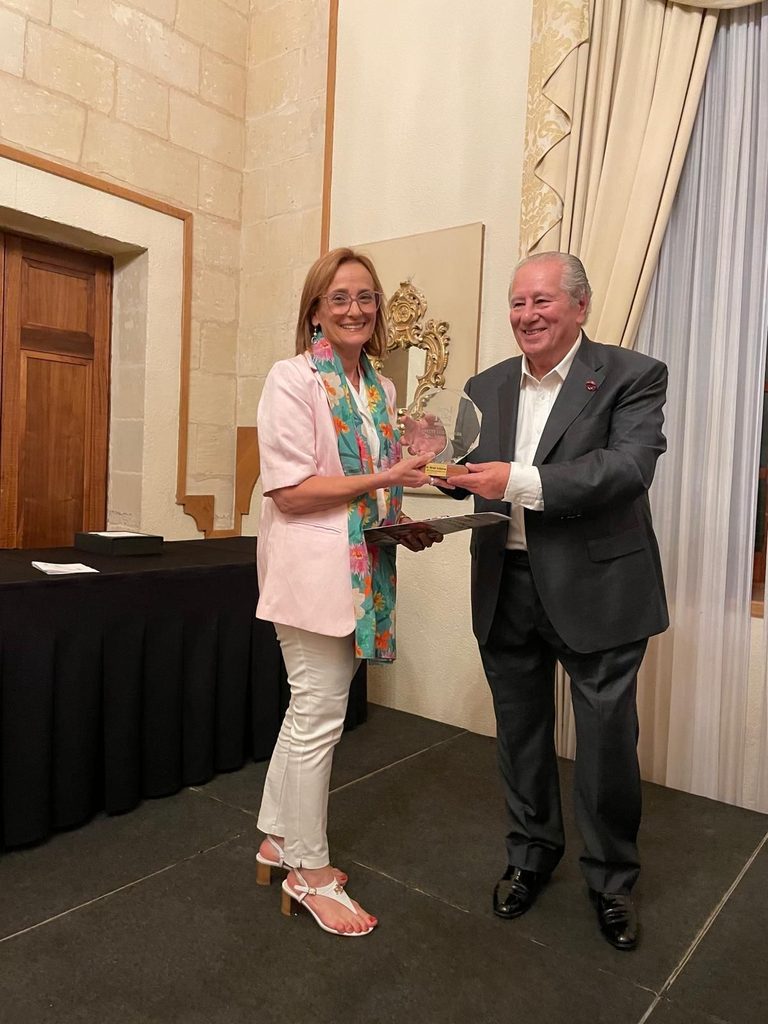
VALLETTA, Malta — Life Network Foundation Malta is proud to note that its Chief Executive Officer, Dr Miriam Sciberras, has been presented with the Yvette Guillaumier Award 2026 by the National Council of Women (NCW) Malta. The award was presented at NCW’s Foundation Day Dinner, held on 25 September at AX Palazzo Capua in Sliema.
The award recognises Dr Sciberras’s contribution to Maltese society through her background in bioethics and voluntary work, her educational work in fostering a culture of life in Malta, Europe and beyond, and her long-standing commitment to supporting vulnerable pregnant women and their infants.
Dr Sciberras holds a degree in dental surgery and a Master’s in Bioethics from the University of Malta. She has led Life Network Foundation since the organisation’s establishment in 2014, overseeing its work across pregnancy support, education and public advocacy on issues relating to the protection of human life.
“I am very happy and deeply grateful to receive this award,” said Dr Sciberras. “It belongs as much to my colleagues and volunteers and to every mother and family we have walked alongside over the years as it does to me. This award emboldens my resolve to continue working in the mission to safeguard life. The truth of the wonder of human life from conception, the humanity of the unborn child and access to help for pregnant women go hand in hand. Support, Education and Advocacy work together to nurture a culture of life, through our work at Life Network Foundation.”
lifenetworkEdit Profile
Life Network Foundation extended its congratulations to Dr Sciberras, describing the recognition as a proud moment for the organisation and a reflection of her years of dedication, perseverance and commitment to protecting human dignity.
About Life Network Foundation Malta
Life Network Foundation Malta is a registered voluntary organisation (VO/1070/15) established in 2014. It provides practical and emotional support to mothers and their babies, delivers counselling for those facing crisis pregnancies through Support services , offers educational programmes in schools, and advocates publicly for the value of human life from conception to natural death.
An unplanned pregnancy in Malta can produce roughly 73 thoughts in the space of ten seconds: How will I tell him? What will my parents say? I can barely afford rent. What about university? My job? Where will I live? I don’t even own a cot.
And somewhere beneath all that noise is one enormous question: What am I going to do?
Unplanned Pregnancy in Malta
First: you do not have to work out the next eighteen years before lunchtime.
If you are unexpectedly pregnant in Malta, there are practical options and people who can help you work through them, one problem at a time.
You may want to raise your baby yourself but have absolutely no idea how you are going to manage it. Fair enough. Babies, unfortunately, do not arrive with an envelope containing €20,000 and the keys to a reasonably priced two-bedroom flat.
This is where support matters.
Life Network Foundation offers women facing difficult or unexpected pregnancies both emotional and practical support. This can include counselling, baby supplies, mentoring, help with accommodation, financial assistance and ongoing accompaniment.
For mothers who need somewhere to live, Dar Tgħanniqa T’Omm offers a supportive home during pregnancy and for a year after the baby is born, giving women the stability and practical help they may need as they prepare for motherhood.
Perhaps money is the panic button.
Maybe you are wondering how you will afford medical appointments, baby clothes, nappies, a cot, a pushchair or all the other things that suddenly appear on the very long list marked Things a Tiny Human Apparently Needs. Life-Network helps with all of this too.
The point is simple: a lack of money should not leave a woman feeling that she has no way forward.
But perhaps the difficulty is not money at all.
Maybe your relationship has fallen apart. Maybe your family is furious. Maybe you are frightened, embarrassed or simply overwhelmed.
This is where having someone neutral to speak to can make an enormous difference.
Sometimes what a woman needs first is not a lecture or a life plan, but someone who will listen and help her separate the actual problems from the panic. Life Network’s counsellors and trained listeners are there for precisely that. Conversations can be confidential, and if you simply need to speak to someone by phone, you do not have to begin by giving your whole life story.
Sometimes the first step really is just hearing another person say: Okay. Tell me what is frightening you most.
And if you genuinely feel unable to raise a child yourself, parenting is not the only possibility.
Adoption is also an option in Malta. A mother who believes she cannot raise her child can explore adoption and receive professional guidance about the process and the support available to her.
None of this means that an unplanned pregnancy in Malta is easy.
It means something much more important:
“I don’t know how” is not the same sentence as “I have no choice.”
A situation that feels impossible while staring at a pregnancy test alone in a bathroom can look very different once another human being sits beside you and says: Right. What is the first problem we need to solve?
Maybe it is housing.
Maybe it is money.
Maybe it is telling your parents.
Maybe it is continuing university.
Maybe it is keeping your job.
Maybe it is simply getting through today.
Real choice requires real alternatives. And real alternatives require more than reassuring words. They require somewhere to live, practical help, financial assistance, emotional support, baby supplies, people willing to listen and people willing to stay.
That support exists.
No woman facing an unplanned pregnancy in Malta should feel that becoming a mother automatically means losing her education, her home, her job or her future. And no woman should have to make one of the biggest decisions of her life while feeling frightened, isolated and convinced that there is nobody to call.
There is someone to call.
If you are facing an unplanned pregnancy in Malta, frightened, unsure what to do or simply need somebody to listen, contact Life Network Foundation on 2033 0023. You do not need to have everything figured out before you pick up the phone. You only need to make the first call. Because sometimes what looks like the end of every plan you had is not the end at all. Sometimes you simply need someone beside you to help you find another way forward.
Few words possess as much moral prestige in our society as the word choice.
Truth can be controversial. Justice can be debated. Even love occasionally attracts the critique of cynics. But choice? Choice is quite untouchable.
This is especially evident in the abortion debate. Supporters of abortion rights often describe themselves as “pro-choice,” a term that carries an immediate positive appeal. After all, who wants to be against choice?
What Does to be Pro-Choice Mean
At first glance, the answer appears obvious. To be ‘pro-choice’ means supporting a woman’s right to choose whether to continue a pregnancy.
But notice something interesting. The word “choice” immediately directs our attention to the person making the decision. It tells us who is choosing. It does not tell us what is being chosen, nor does it tell us who may be affected by that choice.
That is why the phrase is so powerful. It frames the discussion in terms of freedom while quietly shifting attention away from the object of the choice itself.
The reality is that choice, by itself, is not a moral argument.
We choose hundreds of things every day. We choose what to eat, where to work, whom to marry and what to believe. The mere existence of a choice does not tell us whether the choice is right or wrong. It simply tells us that a decision is being made.
Imagine somebody saying, “I support people’s right to choose.”
The obvious response would be: “Choose what?”
Because no serious society has ever believed that every choice is automatically good simply because it is chosen.
We do not have the right to choose to steal from our neighbour. We do not have the right to choose violence against innocent people. We do not have the right to choose reckless behaviour that puts others in danger.
This is not because freedom is unimportant. It is because freedom has always existed alongside responsibility. In fact, civilisation itself depends upon recognising that our choices affect other people.
In fact, the moment another person enters the picture, choice is no longer the only value in the room.
And this brings us back to abortion.
One of the strangest features of the abortion debate is that it is presented as though there is only one person whose interests deserve consideration.
Yet everyone knows there are two human beings involved. Two human beings who are both fully human – because humanity does not depend upon size, age, or intelligence. It simply depends on human DNA – and this is uniquely present in both mother and baby.
This means that the question is not simply whether a woman has a choice. But whether one person’s choice extends to another person’s life. That is a very different discussion.
What is particularly striking here is that the language of choice often excludes the one individual who has the most at stake. The woman chooses. The doctor chooses. The politician chooses. The activist chooses.
Everyone is talking about choice.
Except the unborn child.
But of choice is such a fundamental value, why does it suddenly disappear when another human being enters the equation?
Supporters of abortion often speak as though the alternative to abortion is the denial of choice. But this is false. A woman who continues her pregnancy has not ceased to make choices.
She chooses whether to raise the child herself. She chooses whether to seek support from family and friends. She chooses whether to pursue adoption. She chooses countless things about her future and her child’s future.
The birth of a child does not end choice. It simply places those choices within the context of another human life.
And that is precisely how freedom operates everywhere else in society. Parents cannot choose to neglect their children. Business owners cannot choose to exploit their employees. Citizens cannot choose to ignore the rights of their neighbours. The presence of another human being creates responsibilities. Why should the unborn child be the exception?
This reveals the dark side of choice.
Not choice itself, but the way the word can be used. Sometimes a beautiful word can hide a difficult reality. Sometimes a slogan can simplify a question that deserves deeper reflection. And sometimes the language of freedom can become a way of avoiding the question of responsibility.
The real issue in the abortion debate is not whether women should have choices. Of course they should. Human freedom is one of the most precious things we possess.
The real question is whether freedom includes the right to decide which human beings count and which do not.
Because when choice becomes detached from responsibility, it ceases to be freedom in its fullest sense. It becomes tyranny. That is why the abortion debate cannot be resolved simply by appealing to choice. Choice matters. But so does the life of the baby; whom is no less human than that of the mother. And a truly humane society should be human enough to care about both.
What if I told you there exists an international declaration, signed by more than 41 countries; that explicitly states there is no international right to abortion? Chances are you’ve never heard of it. Fewer still know that Life-Network Foundation actually joined it and sought answers from the Government when our country’s name was nowhere to be found among its signatories.
The document is called the Geneva Consensus Declaration. Despite its name, it has nothing to do with the Geneva Conventions governing armed conflict. Adopted in October 2020 by a coalition of countries led by the United States and eventually endorsed by dozens of nations, it is a political declaration, built around four principles: promoting women’s health, strengthening the family, respecting national sovereignty, and affirming that international law does not establish a right to abortion.
Why should anyone in Malta care?
Because Malta is regularly told that it is “on the wrong side of history” for protecting unborn life. International organisations, advocacy groups and even some politicians often speak as though abortion were already an established human right under international law.
But is it?
The Geneva Consensus Declaration was created to answer that very question. Its signatories argued that while countries may choose different approaches to abortion, no international treaty creates a legal right to abortion or obliges states to legalise it. In other words, nations remain free to decide this issue for themselves.
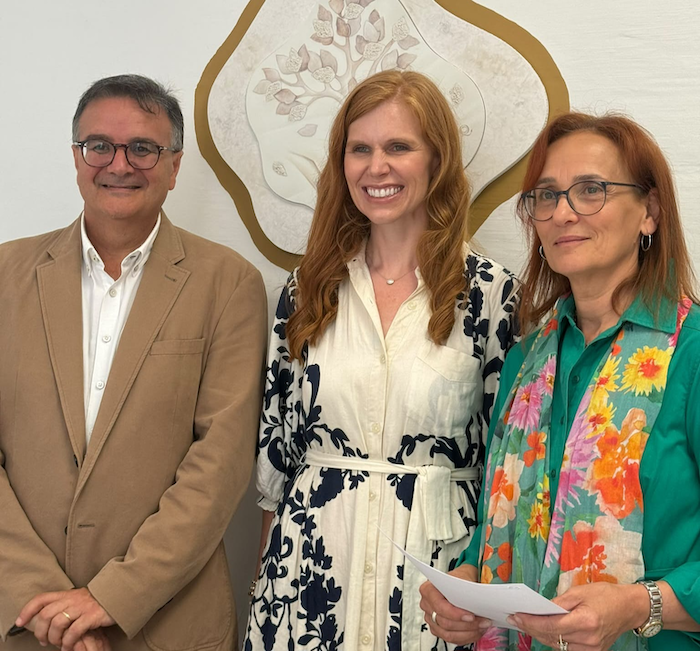
The issue has become ever more newly relevant following the recent visit to Malta of Bethany Kozma, one of the key figures behind the Geneva Consensus Declaration during its launch in 2020, to Life Network Foundation. Her visit provided an opportunity to revisit a fascinating, yet largely forgotten, chapter of Malta’s own diplomatic history.
When the Declaration was launched, Life Network Foundation followed the initiative closely. As governments gathered virtually to endorse it, one country’s absence stood out.
Malta.
Curious as to why Malta had not joined a declaration that appeared to reflect its longstanding legal position on abortion, Life Network contacted the Ministry for Foreign and European Affairs.
The Government’s reply was revealing. Malta never made it to be one of its signatories.
Although the Geneva Consensus Declaration is not legally binding, its significance should not be underestimated. International declarations often shape future negotiations, influence legal arguments and contribute to the gradual development of international norms. Today’s political declaration can easily become tomorrow’s legal interpretation.
That is why the Geneva Consensus Declaration matters.
It is not merely a statement on abortion. It is a statement on sovereignty, on the proper interpretation of international law, and on the conviction that no country should be pressured into changing its laws by claims that an international right exists when no such right has been established.
For those of us who believe that every human life possesses inherent dignity from conception, the Geneva Consensus Declaration represents something even more profound. It reminds us that human rights are meaningful only if they are truly universal. If the smallest and most vulnerable members of the human family can be excluded from protection, then the language of universal human rights begins to lose its meaning.
Bethany Kozma’s visit was more than a courtesy call. It was a timely reminder that the work of defending human dignity is never complete. Declarations alone cannot protect life. Laws matter. Institutions matter. But above all, people matter; people willing to stand for those who cannot stand for themselves, to speak for those who have no voice, and to defend the inherent dignity of every member of the human family.
Malta has long been recognised internationally as a country that defends the right to life. That voice should not diminish. If anything, it should become clearer, more confident and more compassionate.
Talking about abortion with your teen can feel like walking into a room full of emotional tripwires. One wrong word and suddenly you are “judgmental.” Another wrong word and you are “old-fashioned.” Say “unborn baby” and they may say “foetus.” Say “pro-life” and they may hear “anti-woman.” Say nothing at all and TikTok will gladly raise your child for you.
So yes, this conversation matters. A lot.
And no, you do not need a theology degree, a medical textbook, or the debating skills of a courtroom lawyer to have it. You need love, clarity, patience, and a backbone. Preferably all four at the same time.
8 Tips to Talk About Abortion to Teens
Start by listening first
This may sound strange, but the first step in talking about abortion is not talking. It is listening. Resist the heroic parental urge to interrupt every three seconds.
This is hard. Especially when your teen says something like, “it’s just a clump of cells,” and your soul briefly leaves your body.
Still, listen.
You are not listening because every opinion is equally true. You are listening because your teen needs to know that this is a safe conversation. If they feel attacked, they will shut down. If they feel respected, they may actually think.
That is the goal. The goal is to help your teen think clearly about human life, human dignity, and real compassion.
Begin with the central question
The abortion debate can become very noisy.
People talk about rights, choice, fear, poverty, health, trauma, politics, religion, and freedom. These are serious issues. They should not be dismissed. But the central question remains simple: what is the unborn child?
Everything depends on that.
If the unborn child is not a human being, then abortion is not a serious moral issue. It may be a medical decision, a private choice, or a personal preference. But if the unborn child is a human being, then abortion is not just one choice among many. It is the taking of a human life.
That is the heart of the pro-life view.
Keep bringing the conversation back to this question. Not in a robotic way. You are not a broken printer. But gently and clearly.
You might say: “I understand why people talk about women’s rights. That matters. But we also need to ask whether there is another human being involved.”
This helps your teen see that the pro-life position is not based on being mean, controlling, or allergic to modern life. It is based on the belief that every human life has value, including the smallest and most vulnerable.
Use simple science, not complicated speeches
You do not need to bury your teen under Latin terms. Simple facts are enough.
The unborn child is alive. The unborn child is growing. The unborn child has their own unique DNA. They are not part of the mother’s body in the same way her heart or kidney is part of her body. They are in her body, but they are not her body.
That matters.
A pregnant woman does not have four arms, four legs, two hearts, and two sets of DNA because she has suddenly become a biological overachiever. There is another human being there. Say it simply.
From the beginning, the unborn child is a distinct human organism. Small, dependent, and developing, yes. But still human.
And here is a helpful line: “being small does not make someone less human. Being dependent does not make someone disposable.”
That sentence does a lot of work.
Talk About Abortion
Do not mock their concerns
Your teen may raise difficult questions.
“What about rape?”
“What about a young girl who is pregnant?”
“What if the family is poor?”
“What if the mother is scared?”
“What if the baby has a disability?”
Do not brush these questions aside. Do not answer with slogans. Do not say, “Well, that hardly ever happens,” even if some cases are statistically rare. If your teen brings it up, it matters to them.
The pro-life answer must be both truthful and compassionate.
You can say: “these situations are heartbreaking. The woman or girl needs real help, protection, medical care, emotional support, and practical support. But the child is still innocent too. We should never answer violence or suffering by ending the life of another vulnerable human being.”
That is not cold. That is consistent. Compassion does not mean choosing which vulnerable person gets protected. Compassion means finding ways to love both.
Explain what “choice” really means
“Choice” is a powerful word. It sounds free. Bright. Modern. But not every choice is good simply because it is a choice.
People can choose kind things. People can choose cruel things. People can choose brave things. People can choose selfish things. The moral question is not only, “can I choose?” It is also, “what am I choosing?”
This is important for teens. They are surrounded by a culture that treats choice as sacred.
My body. My choice.
My life. My choice.
My truth. My choice.
But a mature moral life asks deeper questions.
Who is affected by my choice?
Is another person harmed?
Does freedom mean doing anything I want, or does it mean choosing the good?
You can tell your teen: “freedom is not just the power to choose. It is the responsibility to choose what is right.”
Be honest about women’s struggles
Pregnancy can be frightening. It can be painful. It can disrupt studies, work, relationships, family life, and plans. Some women are pressured by boyfriends, parents, friends, doctors, or employers. Some feel trapped. Some feel abandoned.
Say that clearly.
Your teen needs to know that being pro-life does not mean ignoring women. It means refusing to abandon them.
A truly pro-life view says: No woman should feel that abortion is her only option.
No woman should be left alone in fear. No woman should be pressured into ending the life of her child. No woman should be told she must choose between her future and her baby.
This is where practical help matters. Talk about pregnancy support. Talk about counselling. Talk about material help. Talk about adoption. Talk about families and communities stepping up.
The pro-life movement must never be only about saying “no” to abortion. It must also be about saying “yes” to life, yes to support, yes to sacrifice, yes to inconvenient love.
Because love is sometimes inconvenient. That is how you know it is not just a slogan.
Teach them to spot bad arguments
Teens are smart. They can learn to see weak arguments.
Here are a few common ones.
“It is just a clump of cells.”
So are all of us, technically. Some of us are just clumps of cells with Wi-Fi and anxiety. The question is not whether the unborn child has cells. The question is what kind of being those cells make up.
“No uterus, no opinion.”
This shuts down discussion instead of answering the moral question. Men can be wrong about abortion. Women can also be wrong. Truth is not decided by anatomy.
“Abortion is healthcare.”
Healthcare heals. It treats disease. It protects life. Abortion deliberately ends the life of the unborn child. Calling it healthcare does not settle the argument. It hides the argument.
“You cannot force your beliefs on others.”
Every law reflects some belief about right and wrong. Laws against theft, abuse, discrimination, and violence all “force” the belief that people should not be harmed. The question is whether unborn children deserve protection too.
Encourage your teen to think.
Keep your tone calm and human
Seeds take time. Your job is not to force instant agreement. Your job is to speak truth with love and keep the door open. Avoid turning every car ride into “Abortion Debate: Episode 47.”
Let the conversation breathe.
Admit when a question is difficult. And admit it when you do not know something. Teens respect honesty more than fake certainty.
And above all, make sure your teen knows this: that if they or someone they know ever faces an unexpected pregnancy, they can come to you. And you may lead them to those who can actually help.
… You can also support our NGO so we can continue defending unborn children, supporting women, and building a culture where every human life is welcomed and protected.
Every year on March 21st – World Down Syndrome Day, something genuinely lovely happens.
The bright socks come out. The mismatched ones. Social media fills with photos, stories, and faces: radiant, mischievous, affectionate faces.
Parents post about their sons and daughters with Down syndrome with a kind of fierce tenderness that only parents understand. Teachers share classroom moments. Friends talk about the hugs, the honesty, the way these children and adults light up a room.
And we say it together: we are all different and precious.
And we mean it.
Anyone who has loved someone with Down syndrome knows this isn’t sentimental fluff. It’s reality. These are children who adore attention and give it back tenfold. Teenagers who dream and argue and roll their eyes. Adults who work, contribute, tease, pray, dance, and love!
Fully human. Fully.
And yet conversations about Down syndrome in pregnancy are often far more anxious and uncertain.
And it is precisely because it matters that there is one part of the conversation we gently avoid.
In some countries, nearly 100% of babies diagnosed with Down syndrome in pregnancy are aborted.
Not because their parents are monsters. Not because families don’t care. Often because they are afraid. Often because they are told it is the responsible choice. Often because a diagnosis of Down syndrome in pregnancy leaves parents feeling overwhelmed and uncertain about the future.
In Iceland, it has been widely reported that close to 100% of babies diagnosed with Down syndrome are aborted. In Denmark, the rate has hovered around 95% or higher.
Thus, when we hear phrases like “virtually eradicated,” something in us should pause.
Because “eradicated” is a word we usually reserve for diseases.
But Down syndrome is not a disease. It is a genetic condition carried by a person — a person who laughs, who cries, who belongs.
World Down Syndrome Day
History has shown us what happens when societies decide that certain traits make lives less worth living. In the twentieth century, eugenics was pursued with chilling confidence under Adolf Hitler and Nazi Germany. It was brutal and coercive, and we rightly recoil from it.
Today, everything is softer. No one is forced. The language is compassionate. The decisions are private.
And yet, when nearly every child with a particular diagnosis disappears before birth, we have to ask — kindly, but honestly — what kind of world we are building.
Because if “precious” is true at five years old… and true at fifteen… and true at thirty… when does it become untrue?
At the scan? At the extra chromosome? At twelve weeks? Or is it always the same child — only smaller and unseen?
To the parents raising children with Down syndrome: this is not a criticism of you. Quite the opposite.
Your love is evidence. Your children are evidence.
And perhaps that is the quiet challenge Down Syndrome Day places before the rest of us.
If we celebrate these children once they are born — if we delight in them, learn from them, advocate for them — then our commitment to their dignity cannot begin at birth.
It has to begin earlier.
Because equality that starts after delivery is already drawing a line.
So yes, wear the socks. And wear them with joy!
Because we are all different and precious,
From the very beginning.
Check out this video from our Night to Shine 2026 which was held in February A night we’ll never forget. Night to Shine was more than an event—it was a celebration of joy, dignity, and every person being seen and valued. From the smiles to the dancing, every moment reminded us: every life is worth celebrating.
Contains information related to marketing campaigns of the user. These are shared with Google AdWords / Google Ads when the Google Ads and Google Analytics accounts are linked together.
90 days
__utma
ID used to identify users and sessions
2 years after last activity
__utmt
Used to monitor number of Google Analytics server requests
10 minutes
__utmb
Used to distinguish new sessions and visits. This cookie is set when the GA.js javascript library is loaded and there is no existing __utmb cookie. The cookie is updated every time data is sent to the Google Analytics server.
30 minutes after last activity
__utmc
Used only with old Urchin versions of Google Analytics and not with GA.js. Was used to distinguish between new sessions and visits at the end of a session.
End of session (browser)
__utmz
Contains information about the traffic source or campaign that directed user to the website. The cookie is set when the GA.js javascript is loaded and updated when data is sent to the Google Anaytics server
6 months after last activity
__utmv
Contains custom information set by the web developer via the _setCustomVar method in Google Analytics. This cookie is updated every time new data is sent to the Google Analytics server.
2 years after last activity
__utmx
Used to determine whether a user is included in an A / B or Multivariate test.
18 months
_ga
ID used to identify users
2 years
_gali
Used by Google Analytics to determine which links on a page are being clicked
30 seconds
_ga_
ID used to identify users
2 years
_gid
ID used to identify users for 24 hours after last activity
24 hours
_gat
Used to monitor number of Google Analytics server requests when using Google Tag Manager
1 minute
Marketing cookies are used to follow visitors to websites. The intention is to show ads that are relevant and engaging to the individual user.
Facebook Pixel is a web analytics service that tracks and reports website traffic.


 **Put your business on TV while supporting a good cause!**
 Send us a private message or contact us to find out more.








 Night to Shine was more than an event—it was a celebration of joy, dignity, and every person being seen and valued. From the smiles to the dancing, every moment reminded us: every life is worth celebrating.