
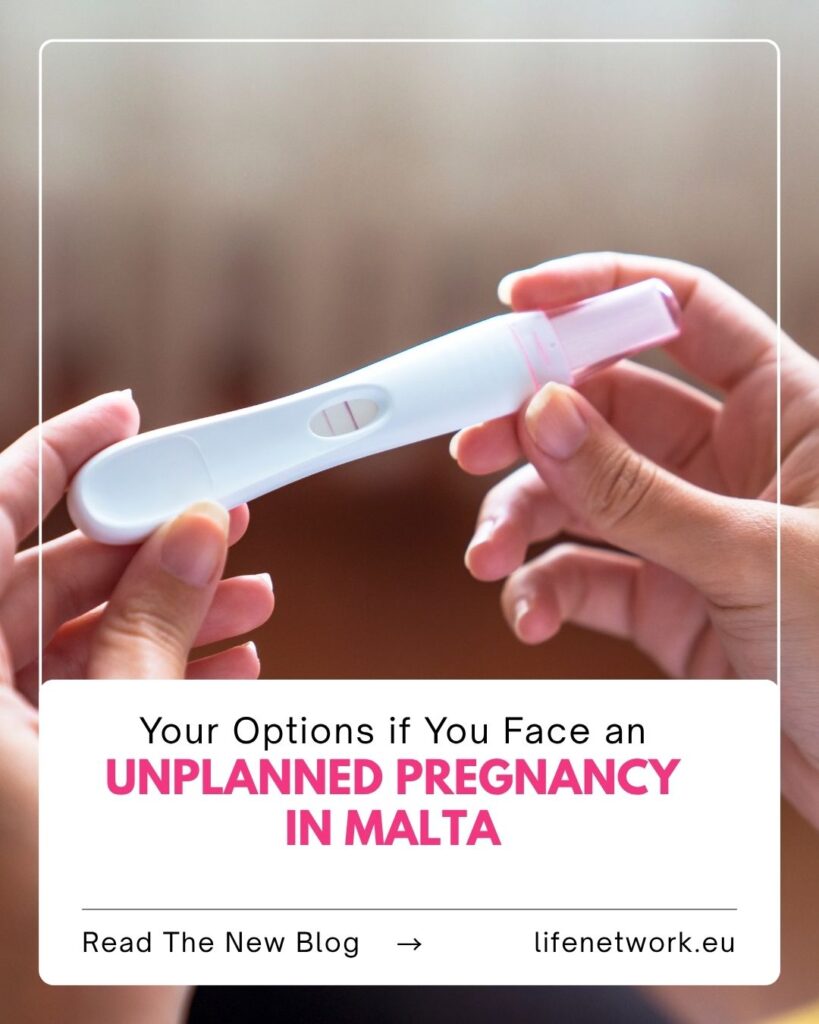
An unplanned pregnancy in Malta can produce roughly 73 thoughts in the space of ten seconds: How will I tell him? What will my parents say? I can barely afford rent. What about university? My job? Where will I live? I don’t even own a cot.
And somewhere beneath all that noise is one enormous question: What am I going to do?
Unplanned Pregnancy in Malta
First: you do not have to work out the next eighteen years before lunchtime.
If you are unexpectedly pregnant in Malta, there are practical options and people who can help you work through them, one problem at a time.
You may want to raise your baby yourself but have absolutely no idea how you are going to manage it. Fair enough. Babies, unfortunately, do not arrive with an envelope containing €20,000 and the keys to a reasonably priced two-bedroom flat.
This is where support matters.
Life Network Foundation offers women facing difficult or unexpected pregnancies both emotional and practical support. This can include counselling, baby supplies, mentoring, help with accommodation, financial assistance and ongoing accompaniment.
For mothers who need somewhere to live, Dar Tgħanniqa T’Omm offers a supportive home during pregnancy and for a year after the baby is born, giving women the stability and practical help they may need as they prepare for motherhood.
Perhaps money is the panic button.
Maybe you are wondering how you will afford medical appointments, baby clothes, nappies, a cot, a pushchair or all the other things that suddenly appear on the very long list marked Things a Tiny Human Apparently Needs. Life-Network helps with all of this too.
The point is simple: a lack of money should not leave a woman feeling that she has no way forward.
But perhaps the difficulty is not money at all.
Maybe your relationship has fallen apart. Maybe your family is furious. Maybe you are frightened, embarrassed or simply overwhelmed.
This is where having someone neutral to speak to can make an enormous difference.
Sometimes what a woman needs first is not a lecture or a life plan, but someone who will listen and help her separate the actual problems from the panic. Life Network’s counsellors and trained listeners are there for precisely that. Conversations can be confidential, and if you simply need to speak to someone by phone, you do not have to begin by giving your whole life story.
Sometimes the first step really is just hearing another person say: Okay. Tell me what is frightening you most.
And if you genuinely feel unable to raise a child yourself, parenting is not the only possibility.
Adoption is also an option in Malta. A mother who believes she cannot raise her child can explore adoption and receive professional guidance about the process and the support available to her.
None of this means that an unplanned pregnancy in Malta is easy.
It means something much more important:
“I don’t know how” is not the same sentence as “I have no choice.”
A situation that feels impossible while staring at a pregnancy test alone in a bathroom can look very different once another human being sits beside you and says: Right. What is the first problem we need to solve?
Maybe it is housing.
Maybe it is money.
Maybe it is telling your parents.
Maybe it is continuing university.
Maybe it is keeping your job.
Maybe it is simply getting through today.
Real choice requires real alternatives. And real alternatives require more than reassuring words. They require somewhere to live, practical help, financial assistance, emotional support, baby supplies, people willing to listen and people willing to stay.
That support exists.
No woman facing an unplanned pregnancy in Malta should feel that becoming a mother automatically means losing her education, her home, her job or her future. And no woman should have to make one of the biggest decisions of her life while feeling frightened, isolated and convinced that there is nobody to call.
There is someone to call.
If you are facing an unplanned pregnancy in Malta, frightened, unsure what to do or simply need somebody to listen, contact Life Network Foundation on 2033 0023. You do not need to have everything figured out before you pick up the phone. You only need to make the first call. Because sometimes what looks like the end of every plan you had is not the end at all. Sometimes you simply need someone beside you to help you find another way forward.
Stay Connected. Make an Impact.
If this post moved you, don’t stop here.
- Sign up to receive updates and see how lives are being changed.
- Support our work by making a donation—every gift helps us reach more mothers, protect more children, and speak up for life.
Together, we’re building a culture that values every life.
Thank you for being part of it.

 Night to Shine was more than an event—it was a celebration of joy, dignity, and every person being seen and valued. From the smiles to the dancing, every moment reminded us: every life is worth celebrating.
