That was the message carried through Valletta a few days ago by the Voice for Choice rally: a call to be the “big sister” a woman might need, to stand beside women facing fear, secrecy and difficult pregnancies, and to offer practical and emotional support.
On one thing, at least, we can happily agree.
Hey sis. We are thinking of you too.
We are thinking of the woman staring at two lines on a pregnancy test and wondering how her entire life changed in thirty seconds.
The student thinking; what happens to my future now?
The mother wondering how she can possibly afford another child.
The woman who is frightened, abandoned or desperately wishing somebody would simply say: “I’m here.”
Yes. Be that sister.
But perhaps sisterhood can stretch just a little further. Because there is somebody else in this story. Very small. Very quiet. Very easy to leave off the placard.
The baby.
The September campaign spoke about a community that “refuses to leave anyone behind.”
We rather like that sentence. We would just add or emphasise one word: anyone.
At Life Network, supporting a woman does not mean pretending her child is irrelevant to her situation. It means refusing the tired idea that, somewhere along the way, compassion requires choosing which of the two deserves our support.
Give her help. Give her friendship. Give her practical assistance. Sit beside her when she is terrified. Help with the things that made her believe she had no choice in the first place.
And then stay. Long after the slogans and marches are over.
So yes: Hey Sis. Thinking of you.
Thinking of your fears. Thinking of your future. Thinking of your baby.
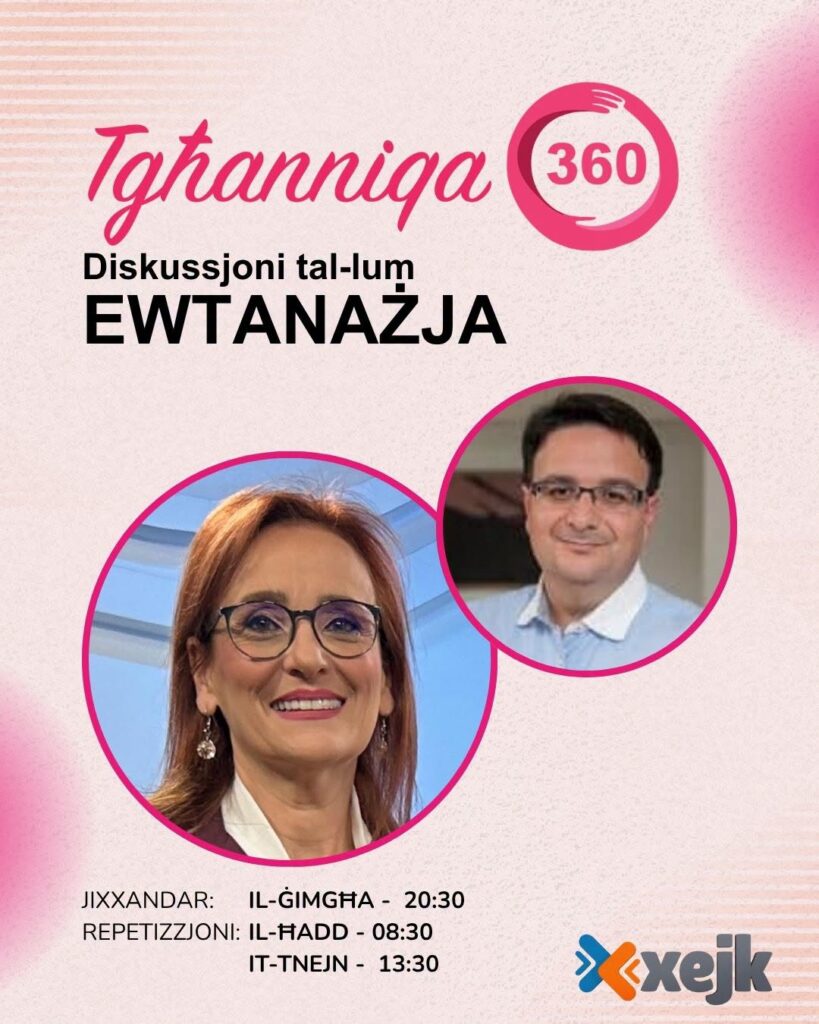
Life Network Foundation is launching a new series of 39 programmes, Tgħanniqa 360, on Xejk TV.
Throughout the series, we will explore the different areas of Life Network’s work and discuss issues connected to life, pregnancy, family, support, dignity and care.
Each programme will focus on a different topic, helping viewers understand the practical support available through Life Network and the challenges faced by individuals and families in our community.
We will also speak about the wider questions surrounding human life, from its earliest stages through different seasons and circumstances.
Tgħanniqa 360 will create space for conversation, information and real stories, while sharing the work being done every day to support women, children and families across Malta.
Join us throughout this 39-programme series on Xejk TV as we look at life from every angle.
**Put your business on TV while supporting a good cause!**
Life Network Foundation is preparing **39 episodes of our upcoming TV programme Tghanniqa 360**, and we’re inviting businesses to advertise with us.
Your advert can reach viewers across the series while your contribution helps support the work and mission of Life Network Foundation.
Interested in getting your business on screen?
Send us a private message or contact us to find out more.
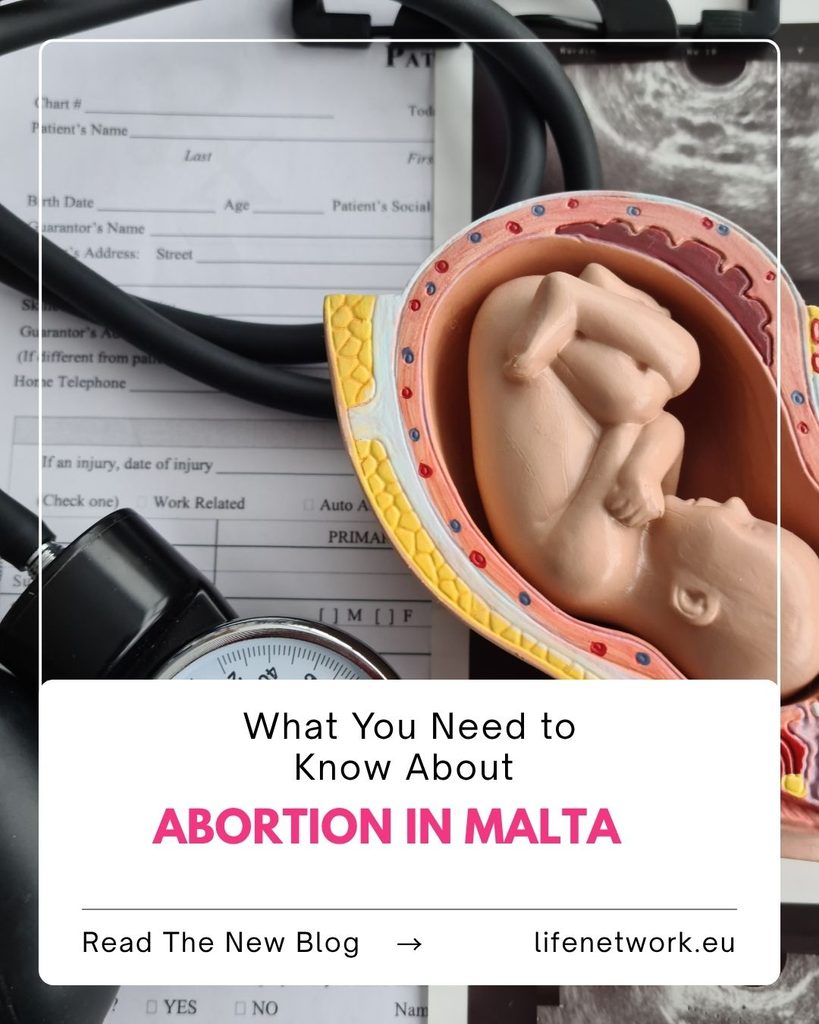
What are the things you Need to Know About Abortion in Malta? Abortion is discussed a great deal in Malta. There are pro-choice NGOs, activists and campaigns calling for changes to the law, and the subject appears regularly in our newspapers and social media feeds.
But amid all the noise, it is worth being very clear about what the law in Malta actually says.
Know about Abortion in Malta
The first thing you should know about Abortion in Malta is: Abortion remains Illegal.
Under Article 241 of the Criminal Code, deliberately procuring a miscarriage is a criminal offence. The law continues to recognise that human life has value from conception, and that jeopardising such life is a criminal offence.
There is, however, an important distinction that sometimes gets lost in the debate.
Malta’s law provides an exception where a medical intervention is necessary because a pregnant woman is suffering from a medical complication that places her life at immediate risk, or her health in grave jeopardy that may lead to death, subject to the conditions laid down in Article 243B. In other words, Maltese law does provide for doctors to intervene to save a woman’s life.
Then comes another claim worth clearing up: women are not routinely being sent to prison for abortion in Malta.
The law treats abortion as a criminal offence, yes. But parliamentary information reported in 2021 established that no woman had actually been imprisoned for an abortion-related offence in the preceding 25 years. Since then, prosecutions have occurred, but outcomes have included conditional discharges, probation and suspended sentences rather than women being sent to jail.
That distinction matters. The law continues to recognise abortion as an offence, while courts retain the responsibility of considering the individual circumstances of the person before them.
And there is another part of the abortion conversation that receives considerably less attention: what happens when a woman wants to continue her pregnancy but feels she simply cannot cope?
That is where organisations such as Life Network Foundation come in.
And the help offered is not simply a sympathetic conversation and a pat on the back.
Life Network accompanies women throughout pregnancy with counselling, emotional support and very practical assistance. If a mother cannot afford baby clothes, nappies, a cot, a pushchair or other essentials, we help provide them. If she is struggling to pay for necessary doctor’s appointments, we can help with those costs too. Financial difficulty should never leave a woman feeling that abortion is her only realistic option.
And sometimes the problem is bigger than a packet of nappies or a medical bill. Sometimes a woman has nowhere safe to live.
Life Network provides free accommodation for women who need housing, with support that can continue for up to three years as they work towards stability and independent living. Our homes are not merely a roof over someone’s head: they are intended to give mothers time, security and practical support while they build a future for themselves and their children. Life Network also assists mothers transitioning into independent living with necessities such as rent, household items and baby supplies.
Life Line can be contacted on 2033 0023, while a 24/7 online chat is available through Life Line Malta. Support is confidential, and counselling is available during pregnancy, after birth and also for those seeking healing after an abortion.
Because an unexpected pregnancy can be frightening.
But frightened should never have to mean abandoned.
And whatever side of the abortion debate makes the most noise, women deserve to know something very practical indeed: help exists, it is real, and they do not have to face pregnancy alone.
Want more information to know About Abortion in Malta ?
What if I told you there exists an international declaration, signed by more than 41 countries; that explicitly states there is no international right to abortion? Chances are you’ve never heard of it. Fewer still know that Life-Network Foundation actually joined it and sought answers from the Government when our country’s name was nowhere to be found among its signatories.
The document is called the Geneva Consensus Declaration. Despite its name, it has nothing to do with the Geneva Conventions governing armed conflict. Adopted in October 2020 by a coalition of countries led by the United States and eventually endorsed by dozens of nations, it is a political declaration, built around four principles: promoting women’s health, strengthening the family, respecting national sovereignty, and affirming that international law does not establish a right to abortion.
Why should anyone in Malta care?
Because Malta is regularly told that it is “on the wrong side of history” for protecting unborn life. International organisations, advocacy groups and even some politicians often speak as though abortion were already an established human right under international law.
But is it?
The Geneva Consensus Declaration was created to answer that very question. Its signatories argued that while countries may choose different approaches to abortion, no international treaty creates a legal right to abortion or obliges states to legalise it. In other words, nations remain free to decide this issue for themselves.
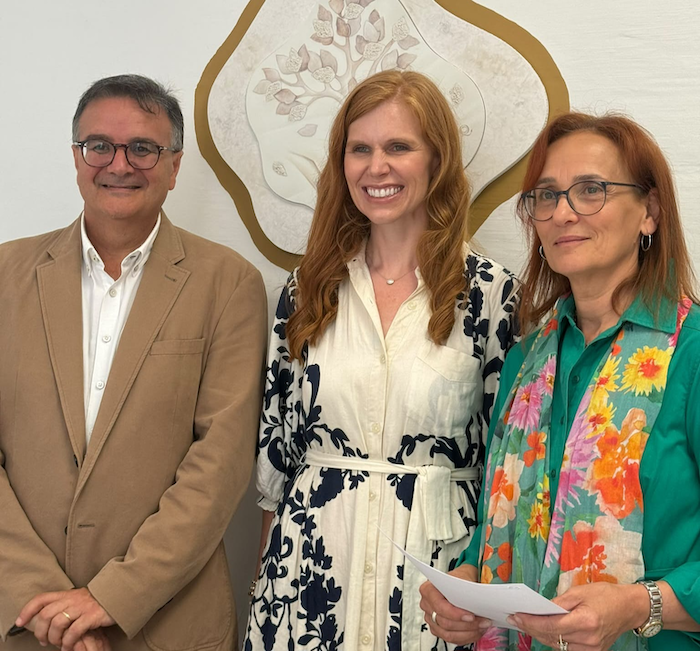
The issue has become ever more newly relevant following the recent visit to Malta of Bethany Kozma, one of the key figures behind the Geneva Consensus Declaration during its launch in 2020, to Life Network Foundation. Her visit provided an opportunity to revisit a fascinating, yet largely forgotten, chapter of Malta’s own diplomatic history.
When the Declaration was launched, Life Network Foundation followed the initiative closely. As governments gathered virtually to endorse it, one country’s absence stood out.
Malta.
Curious as to why Malta had not joined a declaration that appeared to reflect its longstanding legal position on abortion, Life Network contacted the Ministry for Foreign and European Affairs.
The Government’s reply was revealing. Malta never made it to be one of its signatories.
Although the Geneva Consensus Declaration is not legally binding, its significance should not be underestimated. International declarations often shape future negotiations, influence legal arguments and contribute to the gradual development of international norms. Today’s political declaration can easily become tomorrow’s legal interpretation.
That is why the Geneva Consensus Declaration matters.
It is not merely a statement on abortion. It is a statement on sovereignty, on the proper interpretation of international law, and on the conviction that no country should be pressured into changing its laws by claims that an international right exists when no such right has been established.
For those of us who believe that every human life possesses inherent dignity from conception, the Geneva Consensus Declaration represents something even more profound. It reminds us that human rights are meaningful only if they are truly universal. If the smallest and most vulnerable members of the human family can be excluded from protection, then the language of universal human rights begins to lose its meaning.
Bethany Kozma’s visit was more than a courtesy call. It was a timely reminder that the work of defending human dignity is never complete. Declarations alone cannot protect life. Laws matter. Institutions matter. But above all, people matter; people willing to stand for those who cannot stand for themselves, to speak for those who have no voice, and to defend the inherent dignity of every member of the human family.
Malta has long been recognised internationally as a country that defends the right to life. That voice should not diminish. If anything, it should become clearer, more confident and more compassionate.
The reaction to the European Parliament votes on the My Voice, My Choice initiative reveals how abortion lobby groups have taken hold of EU institutions. The local pro-abortion lobby group will stop at nothing to force abortion on Malta, now taking this issue to garner support at EU level.
We are told that this initiative is about “caring for women,” about “civilisation,” about compassion. Those who opposed it are labelled despicable and shameful, and accused of restricting women’s choices. In a widely shared post, activist Natalie Psaila Stabile echoed this narrative, publicly condemning Maltese MEPs who voted against the initiative and framing their opposition as an attack on women.
But beneath the slogans lies a deeper and more troubling reality. This initiative is not about safeguarding women’s health. Women have lost their lives too, in licenced abortion clinics, and the most aborted child is the female child in the womb. This initiative is about normalising and financing the deliberate ending of unborn human life, even in countries whose citizens and laws have chosen to protect it.
Protocol No. 7 of its Treaty of Accession to the European Union ensures that EU treaties or laws do not affect the application of Malta’s national legislation relating to abortion. Why is the will of the Maltese people not being respected?
Respect for Women is not equivalent to Disrespect for Life in the Womb
The claim – repeated by Ms Psaila Stabile and others – that women in Malta have “only two choices”, illegal abortion or travel abroad, is a false dilemma. Malta already allows medical intervention when a woman’s life is genuinely at risk. What remains illegal is not healthcare, but the intentional killing of a child before birth.
To speak as though abortion were the only compassionate response to tragedy, illness, or foetal disability is not care -it is despair dressed up as choice.
We are repeatedly told that “most abortions” involve fatal foetal anomalies or serious health risks. We all know that this is the ‘key” that abortion juggernauts use to introduce abortion on demand up until birth. A diagnosis of disease or disability should never be a death sentence to the patient. A society that responds to disease or disability by eliminating the sufferer is a scary place to live in. The response to disability and disease is care and support, not elimination.
Europe Has No Mandate to Override Moral Diversity
Peter Agius was right to insist that abortion is a matter of national competence. The European Union is built on the principle of subsidiarity – that decisions touching deeply held moral convictions belong at the most local level possible.
Member States differ profoundly on questions of life, family, and human dignity. For the EU to fund abortions in countries where they are illegal is not neutrality – it is ideological coercion through financial means.
Men, Women, and the Silencing of Moral Conscience
It is also telling that opposition to this initiative is dismissed not on the basis of argument, but on the basis of gender. Three men – Alex Agius Saliba, Peter Agius, and David Casa – were accused of restricting women’s choices, as though moral reasoning, legal responsibility, and defence of the vulnerable were invalid the moment a man speaks.
This is not feminism.
It is moral intimidation.
Shame Is Not an Argument
Invoking “Poland’s and Ireland’s tragedies” without nuance ignores the fact that Ireland legalised abortion not because truth changed, but because fear was weaponised. We are now witnessing the same tactic at a European level: moral complexity reduced to emotional pressure; dissent painted as cruelty.
But shame is not an argument.
And compassion cannot be built on denial.
A Final Word
Those who voted against My Voice, My Choice did not vote against women. They voted for the principle that human life matters, that every child in the womb deserves protection. They voted for a Europe that respects diversity – not one that enforces a single distorted anti life vision calling it “choice.” They voted for a future where care means standing with both mother and child, not pitting one against the other.
That position is not shameful. It is courageous.
And the fact that an alternative motion affirming that abortion remains a national competence was supported by 241 MEPs, even though it was ultimately rejected, should give the European Parliament food for thought.
Ahead of Wednesday’s vote concerning My Voice, My Choice, I respectfully urge you to support counter-resolution B10-0557/2025.
Should this counter-resolution be adopted, the My Voice, My Choice resolution—initiated by Ms Abir Al-Sahlani and approved by the FEMM Committee—would automatically fall. This is a matter of significant legal and institutional importance.
The draft resolution seeks to require EU funds to cover abortion-related costs, including transport, accommodation, and the medical professionals performing abortions. Such a proposal raises serious concerns, including:
The initiative forms part of an ideological campaign aimed at mischaracterising abortion as a human right.
Abortion is not recognised as a human right under international law.
The right to life is a fundamental human right, and abortion directly undermines this principle.
The European Union has no legal competence to regulate or influence abortion policy.
Attempts to provide abortion as an EU-funded service violate EU treaties and infringe upon the sovereign rights of Member States.
The European Court of Human Rights has consistently affirmed that there is no right to abortion under the European Convention.
The proposal risks violating freedom of conscience and the right to conscientious objection, which are protected under international law.
For these reasons, I respectfully ask you to uphold the principle of subsidiarity and prevent any further expansion of EU competences into areas that clearly and legally belong to the Member States.
I therefore strongly encourage you to vote in favour of counter-resolution B10-0557/2025.
Please note that the Maltese public will be kept informed of the outcome of this vote.
“The EU must respect the sovereignty of its Member States. Decisions on abortion in Malta should be made by the Maltese people, not imposed by Brussels,” said Life Network in a firm call to action today.
Brussels, 2 December 2025 – The European Parliament today held a hearing on the Citizens’ Initiative “My Choice My Voice”, which proposes an EU funding mechanism to provide abortions across all Member States — including countries where abortion is currently illegal, such as Malta and Poland.
The debate saw over 20 MEPs intervene. Socialist and Green MEPs supported the initiative, advocating for cross-border abortion access. In contrast, the EPP and other centre-right groups strongly argued that the EU should respect the prerogatives of Member States and refrain from imposing abortion policies at EU level.
The proposal will now move to a vote on a Resolution in the European Parliament this December.
Life Network expressed gratitude to MEP Peter Agius for honouring his pledge to defend life and represent the people of Malta during the debate. The organisation calls on all Maltese MEPs to uphold the right to life and reject the proposed EU funding for abortions in the upcoming vote.
“This is a defining moment for Malta. We urge our representatives to stand firm and protect our national values,” Life Network added.
“Defending life is not a step backward — it is the foundation of every civilisation.”
As pro-abortion lobbies push European governments to make abortion a constitutional right, Life Network Foundation Malta stands with campaigners across Europe who are calling for real policies that help women choose life.
At a packed event in Brussels on the 15th October, 2025, promoting Maternity Support in Europe, hosted by the One of Us Federation, and the European Conservatives and Reformists Group — doctors, MEPs, and attendees from twenty countries heard moving stories of courage and conviction. Their message was clear: Europe must recognise motherhood as a fundamental right worth defending.
The President of the One of Us Federation, Former European Commissioner Prof Tonio Borg opened the conference with a call for the European Union to prioritise real support for women:
“We want motherhood to be a protected good, not a burden. If Europe wants to defend freedom, it must begin by protecting life.”
Eight MEPs from 6 different countries were speakers, including
Maltese MEP Peter Agius affirmed the importance of respecting national sovereignity and conscience, warning that the push to include abortion in the European Charter of Fundamental Rights would be “a direct violation of the sovereignty of Member States and of freedom of conscience,” MEP Laurence Trochu, who said that “We are here to fight a political and moral battle on the side of life” and MEP Miriam Lexmann , who highlighted that “Defending life is not extremism, it’s humanity!”
Testimonies from women in France, Italy, and the Netherlands revealed a painful truth:
That thousands of women across Europe do not freely choose abortion — they turn to it because they lack support. One young Dutch mother shared how, when pressured to abort, she was greeted with “congratulations” instead of “what are you going to do?”, no words that could give her the hope she needed to continue her pregnancy.
Speakers urged the EU to translate Article 33 of the EU Charter of Fundamental Rights, which guarantees maternity protection, into concrete measures: housing aid, counselling, job protection, and funding for maternity homes that accompany mothers in need.
Life Network Foundation Malta echoes this call for justice and compassion:
Conference attendee, Dr Miriam Sciberras, CEO of Life Network Foundation said that “Malta has always stood firm in protecting both mother and child. But true protection means going further, by investing in networks that empower women, not abandon them. Every woman deserves to be told she is capable, that her child is welcome, and that she will not face the maternity journey alone.”
As Europe debates the meaning of rights and freedoms, Life-Network Foundation reminds policymakers that a society that fails to protect motherhood fails to protect its future.
Defending life is not a step backward it is the beginning of every civilisation. Malta must continue to lead by example: a nation that safeguards the most vulnerable and stands unashamedly for life.
HSBC Malta Foundation has reaffirmed its commitment to supporting vulnerable members of the community by contributing to the Agħti Tgħanniqa (Give a Hug) campaign, an initiative by Life Network Foundation aimed at assisting young mothers as they transition towards independent living.
The campaign provides essential financial and material support to mothers leaving Dar Tgħanniqa Ta’ Omm (Hug of a Mother Home), a residential home offering shelter and care for women facing unplanned pregnancies. Through this initiative, these women receive assistance with start-up rent, home necessities, baby supplies, and ongoing resources to ensure they have a stable foundation to build their future.
Speaking about HSBC Malta’s support for the initiative, Glenn Bugeja on behalf of the HSBC Malta Foundation, said, “Empowering individuals to take control of their future is at the heart of our community efforts. The Agħti Tgħanniqa campaign aligns with HSBC Malta Foundation’s commitment to fostering social well-being by ensuring young mothers have the support they need to provide a secure environment for themselves and their children.”
The donation will contribute directly to securing safe housing, providing essential supplies, and ensuring that these mothers receive the guidance needed to navigate early parenthood with confidence.
As part of the fundraising efforts, Life Network Foundation will host a TV marathon on Saturday, 21st June, where supporters and partners will come together to raise further funds for the campaign. HSBC Malta’s contribution reflects its long-standing commitment to supporting families and strengthening community resilience.
Suzette Muscat, Executive Secretary at Life Network Foundation, expressed gratitude for HSBC Malta’s support, saying, “This initiative is about giving young mothers the opportunity to rebuild their lives with dignity and hope. The generosity of organisations like HSBC Malta ensures that we can continue offering vital support to those who need it most.”
Through partnerships with organisations dedicated to social impact, HSBC Malta continues to invest in meaningful initiatives that create lasting change.
Press Statement: Focus on Strengthening Palliative Care, Not Euthanasia
Life Network Foundation express deep concern over the Maltese government’s proposal to introduce voluntary euthanasia. While framed as a compassionate choice under strict conditions, euthanasia is not care, but the deliberate termination of a human life. True care means standing by those who are suffering, ensuring they receive the dignity, comfort, and support they deserve in their final days.
Palliative care remains the most humane and ethical approach to end-of-life treatment. It is a field that continues to evolve, and there is still much to be. The recent launch of Malta’s National Palliative Care Strategy 2025-2035 underscores the government position that there is still much more to do in Malta to ensure that patients receive dignified, holistic support throughout their illness through palliative care services.
The introduction of euthanasia undermines the very foundation of palliative care. In countries where euthanasia has been legalised, palliative care services have been deprioritized, leading to less investment in the compassionate treatment of terminally ill patients. Rather than presenting death as a solution, policymakers must work to ensure every patient receives the best possible care until their natural passing.
Beyond the fundamental ethical concerns, the proposal raises serious practical and medical issues. Predicting death within six months is scientifically questionable. Numerous cases exist of patients defying terminal prognoses. The risk of erroneous assessments could lead to irreversible consequences.
Furthermore, ensuring that euthanasia is entirely voluntary and free from coercion is impossible, as demonstrated in countries where euthanasia is legal. Studies have shown instances where vulnerable individuals feel pressured, explicitly or implicitly, to opt for euthanasia due to social, financial, or healthcare burdens.
Equally concerning is the government’s proposal mandating that objecting medical practitioners refer to patients for euthanasia. This infringes on their fundamental right to conscientious objection, forcing healthcare professionals to participate indirectly in a practice they find morally objectionable. Such a policy undermines medical ethics and places undue pressure on doctors who are dedicated to preserving life.
Rather than introducing euthanasia, we urge the government to focus on expanding palliative care resources, increasing awareness, and ensuring that no patient feels abandoned or pressured into choosing death over care. Every person deserves to live their final moments with dignity, surrounded by compassionate support, not faced with the option of premature death.
Life Network Foundation calls on policymakers, healthcare professionals, and the Maltese public to engage in a meaningful dialogue that prioritizes life, care, and dignity. Let us work together to strengthen palliative care and uphold the fundamental value of human life.
Contains information related to marketing campaigns of the user. These are shared with Google AdWords / Google Ads when the Google Ads and Google Analytics accounts are linked together.
90 days
__utma
ID used to identify users and sessions
2 years after last activity
__utmt
Used to monitor number of Google Analytics server requests
10 minutes
__utmb
Used to distinguish new sessions and visits. This cookie is set when the GA.js javascript library is loaded and there is no existing __utmb cookie. The cookie is updated every time data is sent to the Google Analytics server.
30 minutes after last activity
__utmc
Used only with old Urchin versions of Google Analytics and not with GA.js. Was used to distinguish between new sessions and visits at the end of a session.
End of session (browser)
__utmz
Contains information about the traffic source or campaign that directed user to the website. The cookie is set when the GA.js javascript is loaded and updated when data is sent to the Google Anaytics server
6 months after last activity
__utmv
Contains custom information set by the web developer via the _setCustomVar method in Google Analytics. This cookie is updated every time new data is sent to the Google Analytics server.
2 years after last activity
__utmx
Used to determine whether a user is included in an A / B or Multivariate test.
18 months
_ga
ID used to identify users
2 years
_gali
Used by Google Analytics to determine which links on a page are being clicked
30 seconds
_ga_
ID used to identify users
2 years
_gid
ID used to identify users for 24 hours after last activity
24 hours
_gat
Used to monitor number of Google Analytics server requests when using Google Tag Manager
1 minute
Marketing cookies are used to follow visitors to websites. The intention is to show ads that are relevant and engaging to the individual user.
Facebook Pixel is a web analytics service that tracks and reports website traffic.


 **Put your business on TV while supporting a good cause!**
 Send us a private message or contact us to find out more.